
Hansel – central purchasing body for the public sector
Hansel is a non-profit limited liability company that aims to generate savings for public administration through efficient procurement operations. Hansel’s customers include ministries and their subordinate departments, municipalities, joint municipal authorities, wellbeing services counties, universities, Keva, parishes, and all public law bodies governed by the state or a municipality.
Hansel’s owners are the Republic of Finland (65%) and the Association of Finnish Cities and Municipalities (35%). The role and function of the company is defined in public procurement legislation, Act on a Limited Liability Company Called Hansel Oy and the state’s procurement strategy. The Ministry of Finance is responsible for ownership steering on behalf of the state.
Hansel finances its operations by collecting a service fee for joint procurement from suppliers and by selling expert services. The maximum amount of the service fee based on customers’ procurement is 1.50 per cent. The average service fee in 2025 was 0.82% (0.83% in 2024).
Hansel’s own procurement amounted to EUR 5.8 million in 2025. The company’s joint procurement is used in procurement whenever possible. If no framework agreement or dynamic procurement system suited to the procurement is available, the procurement is carried out in accordance with the company’s processes.
Tax footprint
Organisation
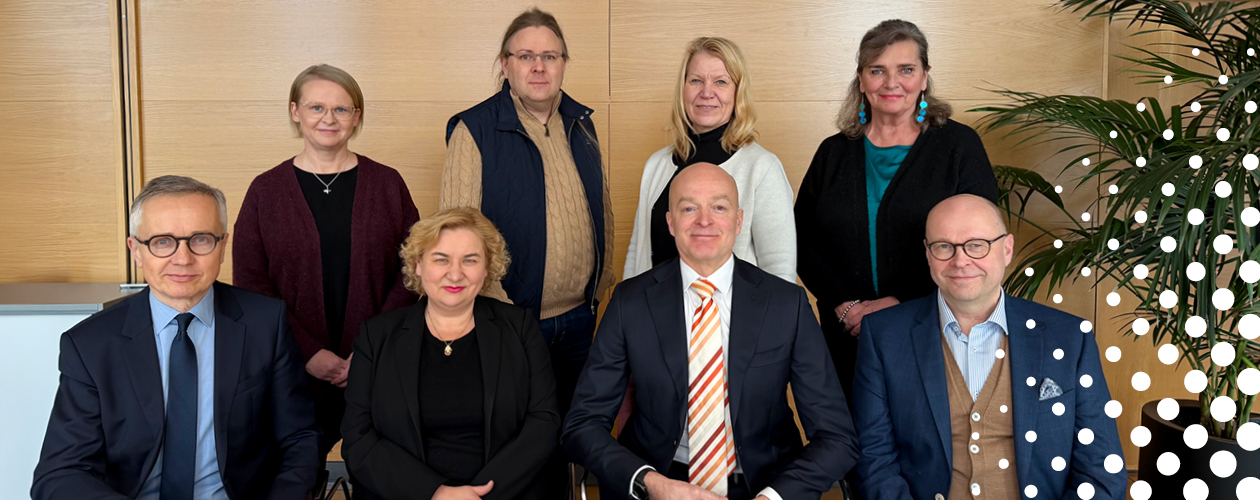
The Hansel organisation consists of 145 specialists. The Board of Directors is elected by the annual general meeting and it is chaired by Antti Neimala, Master of Laws with court training. The vice chair was Hanna Tainio, the Deputy Managing Director of the Association of Finnish Cities and Municipalities, until 5 March 2025 Juha Myllymäki, Legal Director at the Association of Finnish Cities and Municipalities from 25 March 2025. The Board members are Antti Laakso Head of Procurement of Aalto University, Johanna Luukkonen, Mayor of the City of Hyvinkää , and Antti Koivula, the Director General of the Finnish Institute of Occupational Health (until 25 March 2025) and the director of the Pirkanmaa welfare area Marina Erhola, Chief Executive Officer of the Wellbeing services county of Pirkanmaa (from 25 March 2025). Category Manager Minna Isoherranen has also attended the Board meetings as an employee representative with the right to be present and speak at the meetings. Board members are not members of the company’s operational management.
The Board of Directors appoints the Executive Committee based on the Managing Director’s proposal. At the end of 2025, the Executive Committee consisted of six persons, including the Managing Director: the Managing Director Anssi Pihkala (b. 1963), Kirsi Koivusaari, Chief Financial Officer (b. 1966); Eija Kontuniemi, Head of Legal Affairs (b. 1966); Maritta Mäkelä, Director of Accounts (b. 1965); Susanna Närvänen, Chief Category Officer (b. 1963); and Mikko Saavalainen, Director of Digital Business (b. 1979).
The Board members and the Executive Committee are appointed in accordance with the Government’s corporate governance principles, which are used to ensure matters such as equality. The Limited Liability Companies Act and Hansel’s articles of association are followed in decision-making. The company’s office is at Postitalo in Helsinki. Hansel has no international operations.
Hansel’s association memberships in 2025:
- Confederation of Finnish Industries EK
- Finnish Business & Society (FIBS)
- Helsinki Region Chamber of Commerce
- Julkisten hankintojen yhdistys ry
- Service sector employers PALTA
- Finnish Association of Communications Professionals (ProCom)
- Institute of Internal Auditors Finland
- Finnish Business Travel Association FBTA
- Suomen Markkinointiliitto ry
- Finnish Association of Purchasing and Logistics (LOGY)
Business operations
Hansel’s business is divided into three areas: joint procurement, tendering services and procurement development services. The central purchasing body promotes profitable public administration, high-quality public procurement and equal, non-discriminatory treatment of suppliers. Hansel’s objective is to organise tendering procedures in a manner that fosters efficient market operations and promotes competition. The company’s Executive Committee and Board of Directors discuss business risks regularly.
Hansel’s business areas
Joint procurement
Joint procurement refers to framework agreements and dynamic procurement systems through which Hansel’s customers can procure products and services. The Act on Public Procurement and Concession Contracts lays down general terms and conditions, such as the subject matter of the procurement, the responsibilities and obligations of the parties and specifies the pricing principles. By using Hansel’s agreement, the customer can verify the legality of the procurement, contractual terms that secure their position and facilitate the management of contracts and suppliers. In joint procurement, Hansel checks the suitability of suppliers and also monitors the supplier’s compliance with contractual and social obligations and the supplier’s solvency during the contract period. Sustainability, preparedness, data protection and information security are taken into account in joint procurement and basic levels are set for them.
Savings are achieved when products and services are competitively tendered for sufficiently large procurement volumes and the needs of as many customers as possible. Joint procurement brings considerable savings to the public administration in terms of both procurement prices and process costs. Joint procurement can also promote competition.
Tendering services
Tendering services are necessary when joint procurement is not available for the subject of the procurement. Hansel’s tendering consultants and lawyers are familiar with public procurement, tendering and contract law. By using the service, the customer can ensure that the procurement is tendered in accordance with the rules, with the best possible terms and conditions, and that price, quality and sustainability factors are taken into account. This frees up the customer’s working time for other tasks, reduces the risks of the contracting entity and promotes the sharing of best practices.
Procurement development
Our development service aims to improve the efficiency and profitability of our customers’ procurement operations. Development managers play the main role in customer assignments, but all of Hansel’s expertise is available. Development services can be related to solving a problem that arises in a customer’s procurement activity, or the service can consist of an analysis, development and change management of procurement control, organisation or implementation as well as personnel training. The content of the development assignment is always tailored to the customer’s wishes on a case-by-case basis and it is implemented in close cooperation.
Read next: Savings targets slowed down growth
You may also be interested in



Savings targets slowed down growth
The Growth Strategy Plus vision is to be our customers’ preferred procurement partner, and the added value to the customer is at the core of the strategy.